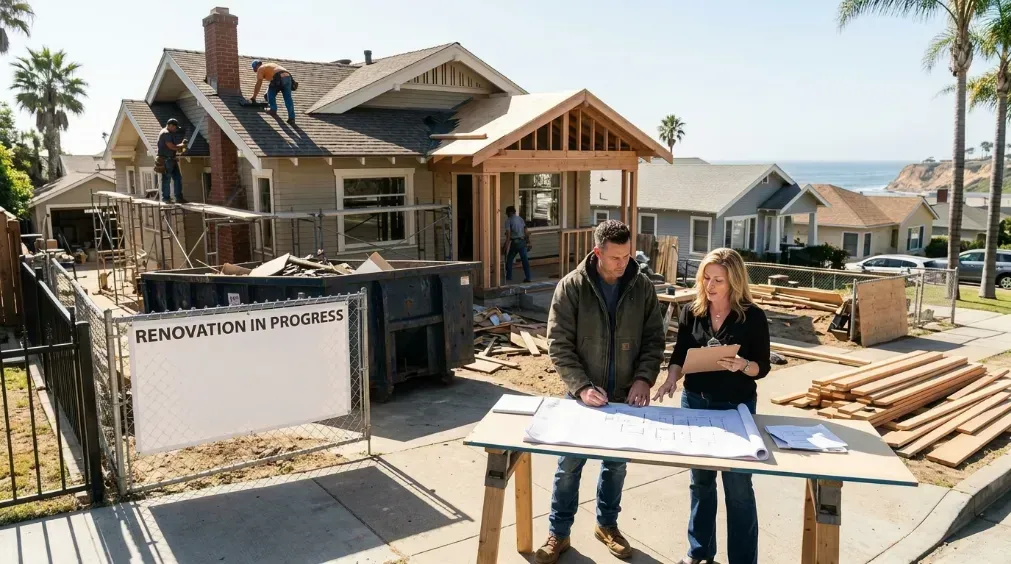
Navigating Fix and Flip Loans for Property Investments

John Constantine • May 21, 2026

Successful property investment requires more than just a good eye for distressed homes. It demands reliable access to capital. When an undervalued property hits the market, the timeline between discovery and acquisition is incredibly narrow. Traditional lending institutions operate on timelines that simply do not align with the needs of aggressive property buyers. This creates a distinct need for specialized financing solutions tailored to the exact requirements of property rehabilitators.


At San Diego Hard Money, we understand the mechanics of property rehabilitation. Investors need funds to acquire the property and separate funds to cover the renovation costs. Structuring these capital requirements efficiently dictates the profitability of the entire project. By utilizing a dedicated fix and flip loan, buyers can secure the necessary leverage to purchase, renovate, and sell residential properties for a profit without tying up all their personal liquidity.


Understanding Real Estate Fix and Flip Loans

Traditional mortgages are designed for owner-occupants looking for long-term stabilization. Conversely, real estate fix and flip loans are short-term commercial instruments based entirely on the underlying asset. Lenders evaluate these loans based on the After Repair Value of the property rather than the historical income of the borrower. This fundamental shift in underwriting allows investors to borrow against the future potential of a home.


When you finance a project through this method, the lender typically provides a percentage of the purchase price alongside a percentage of the rehabilitation budget. The renovation funds are held in escrow and released through a structured draw schedule as the contractor completes specific phases of the work. This keeps the project moving forward while ensuring the lender's capital directly improves the asset.


Because these loans carry shorter terms, usually ranging from six to eighteen months, the exit strategy is a primary focus during the underwriting process. The borrower must have a clear plan to either sell the property upon completion or refinance the debt into a long-term commercial mortgage.

Capitalizing on the San Diego Market

The Southern California property landscape is notoriously competitive. San Diego presents a unique environment where housing demand consistently outpaces supply. Neighborhoods like North Park, Clairemont, and Chula Vista feature older housing stock ripe for modernization. Buyers actively seek move-in ready homes in these localized markets, creating a highly profitable corridor for investors willing to put in the work.


However, acquiring distressed assets in San Diego requires speed. Cash buyers and institutional funds aggressively target the same properties. If an investor waits forty-five days for a conventional bank approval, the opportunity will vanish. Local hard money lending bridges this gap. A localized lender understands the specific nuances of San Diego zoning, neighborhood values, and buyer preferences. They can approve funding based on local market data in a fraction of the time required by national banks.


By utilizing localized capital, investors can submit offers with short contingency periods. This makes their bids highly competitive against cash offers, allowing them to secure premium properties in highly sought-after San Diego zip codes.


Structuring Your Investment Strategy

Not every distressed property fits the standard rehabilitation mold. Sometimes a property has foundational issues, fire damage, or a layout so obsolete that a simple cosmetic update will not suffice. When the scope of work exceeds standard renovations, investors must pivot their financing strategy.


For projects requiring structural changes, room additions, or complete teardowns, standard rehabilitation funds might fall short. In these scenarios, utilizing specialized ground-up construction loans provides the heavy-duty capital necessary to execute massive transformations. These loans are specifically structured to handle permits, architectural planning, and ground-up building phases that standard flip loans do not cover.


Evaluating the scope of work accurately before securing capital prevents budget shortfalls. Successful investors build contingency funds into their budgets to handle the unexpected plumbing or electrical issues that inevitably arise once walls are opened.

Transitioning from Flipping to Holding

A shifting market often requires a shifting strategy. Many investors acquire a property intending to sell, only to realize the rental yield presents a more lucrative long-term opportunity. San Diego features a massive rental market driven by military bases, universities, and a robust technology sector. Converting a flip into a long-term rental allows investors to build generational wealth and benefit from asset appreciation over time.


When an investor decides to hold a property rather than sell it, they must exit their short-term hard money loan. This is accomplished by refinancing into a long-term product. For investors who do not want to rely on personal income verification, DSCR loans provide the perfect exit strategy. Debt Service Coverage Ratio loans are qualified based on the rental income the property generates rather than the borrower's personal tax returns.


As investors grow their portfolios, they naturally scale from single-family homes into larger complexes. Upgrading your investment strategy requires a different tier of capital planning. You can read more about scaling your portfolio in our detailed breakdown of strategic multifamily loans for San Diego property investors.

Partnering with the Right Local Lender

The success of a property rehabilitation heavily depends on the reliability of your financial partner. Missed closing dates can cost you earnest money deposits, and delayed construction draws can cause contractors to walk off the job. You need a lender who prioritizes communication, speed, and transparency.


Our team is deeply rooted in the local market. If you want to learn more about our lending philosophy and how we support local investors, visit our About Us page. We evaluate each deal on its individual merits to provide funding solutions that make sense for your specific timeline and budget.


If you have located a property and need to move quickly, do not let standard banking delays cost you the deal. Reach out through our Contact Us page to discuss your exact project parameters and secure the capital you need to start building your portfolio today.


Frequently Asked Questions

  • What credit score is required to secure a fix and flip loan?

    Because hard money loans are asset-based, lenders place far more weight on the property value and the profitability of the project than on the borrower's personal credit history. While a reasonable credit profile is helpful, investors with less-than-perfect credit can routinely secure funding if the deal metrics are strong and they have sufficient equity.


  • How quickly can a hard money lending transaction close?

    Unlike traditional banking mortgages that can take up to sixty days, specialized hard money loans can close in a matter of days. Once the property valuation is confirmed and the title is cleared, funds can be deployed in as little as five to ten business days, allowing investors to meet aggressive closing deadlines.


  • Do these loans cover both the purchase price and construction costs?

    Yes, standard rehabilitation loans are structured to cover a significant percentage of the property purchase price alongside 100 percent of the approved renovation budget. The purchase funds are dispersed at closing, while the construction funds are held in escrow and released to the borrower in draws as the renovation work is completed.


By John Constantine May 14, 2026
Building a robust property portfolio requires consistent access to reliable capital. Investors looking to expand their footprint in Southern California understand that the demand for housing continues to outpace available supply. This dynamic creates a highly lucrative environment for acquiring apartment buildings, duplexes, and large residential complexes. Securing the proper financing is the foundational step in capitalizing on these profitable opportunities. San Diego Hard Money provides customized funding solutions tailored specifically to the unique demands of our local market. Our specialized team understands the nuances of San Diego CA neighborhoods and delivers agile financing options that align directly with your immediate and long-term investment goals. Whether you are purchasing your first duplex or expanding an existing commercial portfolio, having a responsive lending partner is essential for success. Developing Your Real Estate Portfolio with Multifamily Assets Investors frequently gravitate toward multi-unit properties because of the inherent financial benefits they offer over single-family homes. A single apartment building generates multiple streams of monthly income from one centralized location. This consolidated approach improves economies of scale regarding property management, routine maintenance, and insurance costs. Furthermore, vacancy risk drops significantly when you have ten separate tenants paying rent instead of relying on a single family.
By John Constantine May 6, 2026
Timing is notoriously difficult to align during property transactions. Buyers frequently find themselves in situations where the perfect property hits the market, but their capital is currently tied up in an existing asset. This creates a stressful funding gap that traditional banking institutions are rarely equipped to handle with the required speed. When you need to act decisively, waiting weeks or months for conventional loan approval is not a viable strategy. Private lending solutions step into this void, providing the agility necessary to secure deals before competing buyers can make their move. As a dedicated partner in the local market, San Diego Hard Money provides the rapid capital necessary to keep your transactions moving smoothly. The Mechanics of Short-Term Capital A bridge loan serves exactly the purpose its name suggests. It creates a financial bridge connecting point A to point B. This type of funding is a short-term financing tool designed to provide immediate cash flow. Borrowers use this capital to meet current obligations while securing permanent financing or waiting for an existing property to sell. By utilizing bridge loans , borrowers can make highly competitive, non-contingent offers. When a seller sees an offer that does not rely on the sale of another house, that offer immediately moves to the top of the pile. The terms of these short-term loans typically span anywhere from six months to two years. This gives borrowers ample breathing room to execute their exit strategy, whether that involves selling an asset or refinancing into a long-term mortgage.
By John Constantine May 3, 2026
Time kills deals in real estate. When a prime distressed property hits the market in North Park or a high-yield rental opportunity opens up in Chula Vista, waiting months for a traditional bank approval is a guaranteed way to lose the contract. Competitive investors need immediate capital to secure profitable assets. By partnering with a dedicated San Diego Hard Money Lender , real estate professionals gain access to rapid liquidity, often securing project funding in as little as 48 hours. Traditional lending institutions simply cannot move at the speed required by modern real estate markets. They are burdened by massive regulatory frameworks, requiring endless documentation, tax returns, personal income verifications, and structural inspections before they will even consider an approval. For the active investor, these delays are unacceptable. Private capital solves this exact problem.
By John Constantine April 23, 2026
Traditional mortgage applications heavily scrutinize personal income. For ambitious investors building a robust portfolio, this creates a significant and frustrating bottleneck. When your tax returns show heavy deductions or your debt-to-income ratio hits the conventional ceiling, traditional banks often reject your application outright. Alternative financing steps in to solve this specific problem. Debt Service Coverage Ratio financing shifts the focus away from your personal tax returns and places it directly on the income-producing potential of the property itself.  At San Diego Hard Money , we specialize in providing specialized financial tools to help investors acquire assets without the traditional red tape. Our team understands the unique dynamics of the Southern California market, and we have structured our offerings to keep your portfolio growing. You can read more about our background and our philosophy by learning more about our approach to lending . How DSCR Loans Transform Real Estate Investing The Debt Service Coverage Ratio is a fundamental metric lenders use to compare a property's gross rental income directly to its debt obligations. A loan of this type qualifies based on the asset's cash flow rather than your personal W-2 income or salary history. San Diego presents a highly competitive landscape for property buyers. Whether you are acquiring a multi-family unit in North Park or a single-family rental in Chula Vista, securing funding quickly gives you a clear and distinct advantage over other buyers. Standard bank loans can take months to process. By removing the need to underwrite the borrower's personal finances, private lenders can approve deals in a fraction of the time.
By John Constantine April 20, 2026
Securing your first investment property in San Diego requires a strategic approach to financing. The local real estate market moves rapidly. High demand, limited inventory, and competitive bidding environments define the landscape from coastal neighborhoods like Pacific Beach to inland communities like El Cajon. Real estate investors must act with speed and certainty to secure profitable deals. Traditional financing presents significant hurdles for property investors. Conventional banks operate with strict underwriting guidelines, extended approval timelines, and heavy reliance on personal income history. These restrictions often disqualify self-employed entrepreneurs or buyers targeting distressed properties that need extensive repairs. When a property lacks a functioning kitchen or clear pest report, a traditional mortgage lender will typically deny the loan.  Alternative financing provides the leverage necessary to compete. Private capital allows investors to bypass conventional red tape, focusing entirely on the profitability and equity of the real estate asset itself.
By John Constantine April 12, 2026
Real estate investing in San Diego requires a calculated blend of market knowledge and rapid execution. Whether you are a wholesaler spotting distressed properties in Pacific Beach or a syndication group eyeing a multifamily unit in Chula Vista, securing the right property is only the first step. The true catalyst for generating robust returns is the capital structure you choose to fund the acquisition and renovation. Traditional banking institutions operate on timelines that directly conflict with the demands of the competitive California housing market. This misalignment forces active investors to seek alternative financing mechanisms that prioritize speed and asset value over conventional underwriting metrics. San Diego Hard Money Lender provides the capital architecture necessary to turn promising acquisitions into completed, profitable assets. By understanding the specific loan options available locally, investors can strategically leverage outside capital to scale their portfolios and execute multiple projects simultaneously without draining their personal liquidity. 
By John Constantine April 6, 2026
San Diego, California, is one of the most competitive real estate markets in the nation. With rising demand for rental housing, multifamily investments have become a cornerstone strategy for developers, portfolio builders, and self-employed investors. Yet, traditional financing often falls short when speed, flexibility, and leverage are critical. This is where hard money lenders in San Diego step in, offering tailored solutions that empower investors to seize opportunities quickly.
By John Constantine March 31, 2026
For many self-employed investors and business owners in San Diego, traditional financing can be a challenge. Banks often require extensive documentation, tax returns, and strict credit checks that don’t always reflect the true financial health of entrepreneurs. That’s where bank statement loans come in providing flexible, asset-based financing tailored to the needs of San Diego’s dynamic real estate market.  In this blog, we’ll explore how bank statement loans work, why they’re ideal for self-employed borrowers, and how local investors can leverage them to grow their portfolios.
March 24, 2026
Wait sixty days for a bank loan in San Diego, and your deal is dead. That is the cold reality of the 619. While the national headlines talk about a cooling market, local boots on the ground know that a prime property in North Park or a coastal fixer in Encinitas still attracts a crowd of hungry buyers. To win here, you don't just need capital; you need velocity. That is where bridge loans and specialized real estate lending come into play.
By John Constantine March 17, 2026
In a competitive real estate market like San Diego, timing is everything. Whether you're a seasoned investor closing multiple deals a year or a builder racing against project deadlines, access to fast and flexible financing can make or break an opportunity. This is where a San Diego hard money lender becomes a powerful resource. Unlike traditional banks, hard money lenders focus on the value of the property and the strength of the deal, not just your credit score or income history. From quick bridge loans to long term investment financing, these lenders provide tailored solutions for local real estate professionals.