Need Funding in 48 Hours? San Diego Hard Money Lenders Have the Answer
Time kills deals in real estate. When a prime distressed property hits the market in North Park or a high-yield rental opportunity opens up in Chula Vista, waiting months for a traditional bank approval is a guaranteed way to lose the contract. Competitive investors need immediate capital to secure profitable assets. By partnering with a dedicated San Diego Hard Money Lender, real estate professionals gain access to rapid liquidity, often securing project funding in as little as 48 hours.
Traditional lending institutions simply cannot move at the speed required by modern real estate markets. They are burdened by massive regulatory frameworks, requiring endless documentation, tax returns, personal income verifications, and structural inspections before they will even consider an approval. For the active investor, these delays are unacceptable. Private capital solves this exact problem.

How Hard Money Lender Services Deliver Speed When Banks Fail
Institutional banks scrutinize the borrower. They evaluate W-2 forms, calculate strict debt-to-income ratios, and dig through years of personal credit history. Hard money lender services operate on a fundamentally different model by evaluating the asset itself. Because private lenders issue loans secured by the underlying real estate, the property carries the weight of the approval.
This asset-based lending approach creates unprecedented speed. When a lender focuses on the current value of a property and its projected After Repair Value, the underwriting process bypasses the bureaucratic hurdles that plague commercial banks. A private lender assesses the equity, reviews the investor's business plan, and makes a swift, decisive lending commitment.
This shift in focus from personal income to property viability is the core reason rapid funding is possible. It serves as a vital bridge for self-employed entrepreneurs, contractors, and full-time investors who have substantial capital locked in other projects but need immediate cash to close their next deal.
The Financial Reality of the San Diego Real Estate Market
San Diego presents a highly competitive environment for real estate professionals. High property values and intense demand mean multiple offers are standard on almost every viable investment property. Cash offers and fast closings consistently win bidding wars against buyers relying on conventional financing.
Whether you are scaling a rental portfolio in Pacific Beach or transitioning into full-time residential development in Kearny Mesa, waiting on a traditional mortgage translates directly to lost revenue. Private financing provides the leverage necessary to compete with all-cash institutional buyers.
Below is a breakdown of how private lending compares to conventional financing for real estate investors.
| Feature | Traditional Bank Financing | Hard Money Lending | Primary Beneficiary |
|---|---|---|---|
| Approval Speed | 30 to 60 days minimum | 48 hours to 7 days | Fast-acting real estate investors |
| Underwriting Focus | Personal income and credit history | Property value and equity potential | Self-employed individuals and flippers |
| Property Condition | Must be fully habitable upon purchase | Can be severely distressed or vacant | Fix and flip professionals |
| Repayment Structure | 15 to 30-year amortized terms | 6 to 24-month interest-only terms | Short-term holders and developers |
| Document Demands | Extensive W-2s and tax transcripts | Business entity and asset documentation | Portfolio builders with complex taxes |
Strategic Loan Solutions for San Diego Investors
Different investment strategies require highly specialized capital structures. A one-size-fits-all loan does not work for an active real estate professional. Private lenders offer targeted financial products designed to support specific phases of real estate development.
Fix and Flip Financing
Distressed properties rarely qualify for conventional mortgages. A roof leak, missing plumbing fixtures, or foundational issues will cause a standard bank to deny funding immediately. Banks require properties to be turnkey and habitable.
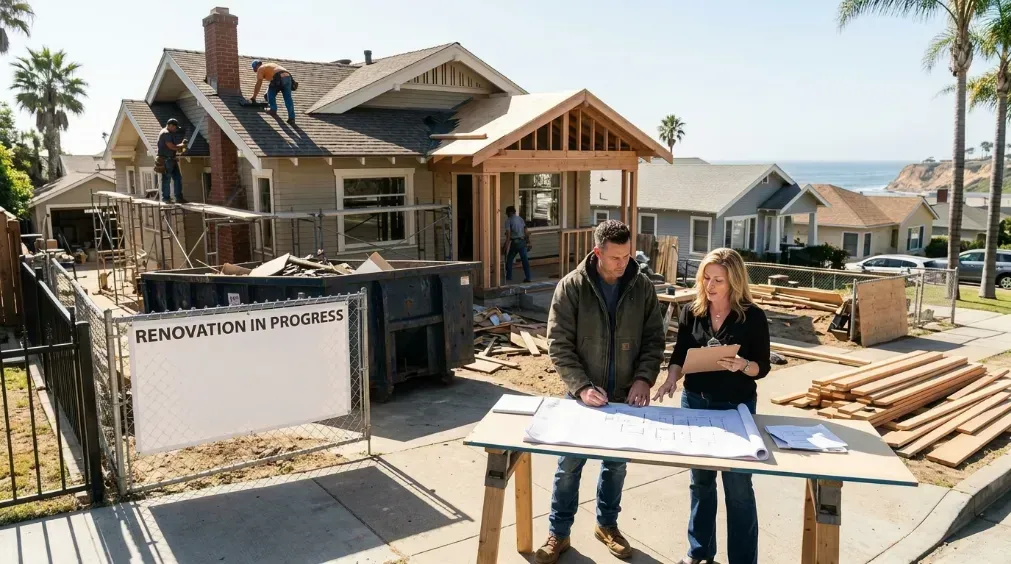
A rapid fix and flip loan covers both the initial purchase price and the entirety of the renovation costs. Investors leverage these funds to acquire and revitalize aging homes across San Diego County. By forcing appreciation through strategic remodeling, investors can reposition the property on the retail market quickly, generating substantial profits upon resale. The 48-hour funding capability allows investors to buy these distressed assets at auction or directly from motivated sellers before competitors even schedule a viewing.
Cash Flow Focused DSCR Loans
Self-employed business owners and seasoned portfolio builders frequently face friction when dealing with traditional income verification. A bank does not always understand the tax strategies used by successful real estate professionals.
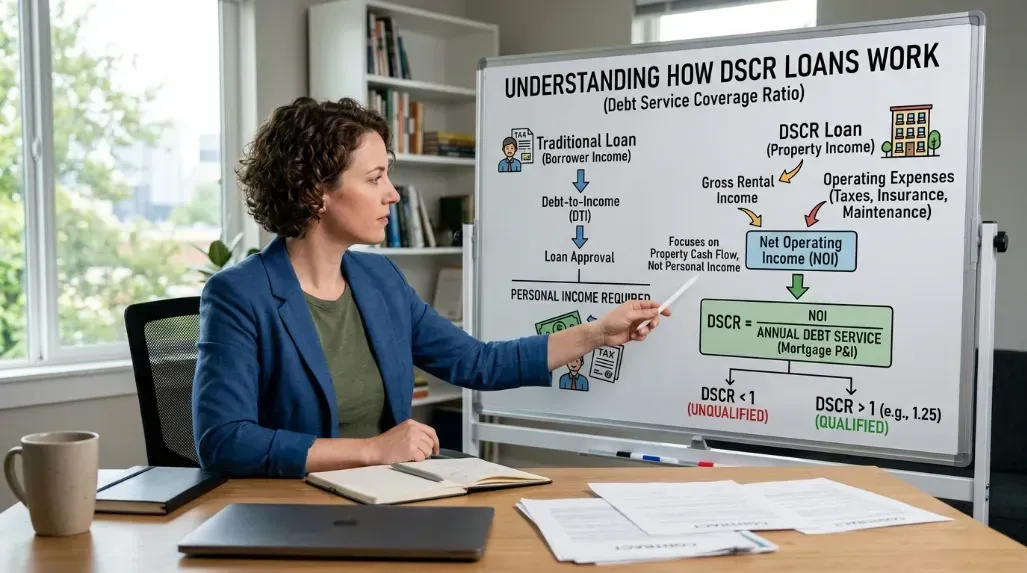
A DSCR loan bypasses personal income checks completely. DSCR stands for Debt Service Coverage Ratio. The underwriting process depends entirely on the monthly rental income the property generates compared to the proposed mortgage payment. If the property cash flows, the loan is approved. This financial product is the ultimate tool for investors acquiring short-term vacation rentals in coastal San Diego or expanding into long-term multi-family units in El Cajon and San Marcos.
Ground-Up Construction Loans
When vacant land or a full teardown presents a higher yield opportunity than a standard renovation, developers require specialized funding that adapts to the building process. Traditional institutions often view new construction as incredibly high risk, leaving builders stranded without capital.
A private ground-up construction loan provides staged financial draws to keep project momentum moving. From pouring the concrete foundation and framing the structure to installing the final roof and passing city inspections, the capital is disbursed in alignment with construction milestones. Private lenders understand the local zoning laws, the permitting timelines in Southern California, and the projected retail value of a newly built San Diego home.
The Mechanics of a 48-Hour Funding Timeline
Securing capital in two days requires efficiency and clear communication between the borrower and the lender. The process is remarkably streamlined compared to the mountain of paperwork required by commercial banks.
First, the investor submits the property details. This includes the purchase contract, the expected renovation budget, and the projected timeline. There is no need to compile years of personal tax returns or draft a formal corporate resume.
Second, the lender conducts an immediate asset valuation. Private lenders rely on local market knowledge, rapid appraisals, and internal evaluations to verify the current property value and the After Repair Value. Because they operate locally in San Diego, they understand neighborhood comparables instantly.
Third, the lender issues an approval and a clear term sheet. The agreement outlines the interest rate, the loan-to-value ratio, and the duration of the loan. Private lending agreements are transparent and straightforward, avoiding the hidden covenants found in commercial lending.
Finally, the capital is wired directly to the escrow account, allowing the investor to close the transaction and take immediate possession of the asset.
Why Experienced Professionals Choose Private Capital
The core demographic utilizing rapid private capital consists of established professionals aged 30 to 60. These are individuals who have transitioned from standard corporate careers into full-time business ownership and active real estate investment. They possess industry experience, local market knowledge, and the ambition to scale their portfolios aggressively.
These borrowers often have substantial net worths but irregular personal income streams due to the nature of their businesses. They understand that the cost of private capital is simply a line item on a project spreadsheet. Paying a slightly higher interest rate for six months is vastly superior to losing a six-figure profit margin because a traditional bank took 60 days to underwrite a loan.
Experienced investors view hard money not as a last resort, but as a primary strategic tool. It provides the leverage needed to acquire multiple properties simultaneously, fund heavy construction budgets, and operate with the agility of a cash buyer. In the San Diego market, speed is the ultimate competitive advantage.
Frequently Asked Questions
What are the basic requirements for a 48-hour hard money loan?
The primary requirement is a viable real estate asset with sufficient equity. Lenders look closely at the purchase price, the required renovation budget, and the realistic After Repair Value of the property. Borrowers must also have a clear business plan for the asset, whether that involves rehabbing and selling the property or stabilizing it for long-term rental income. A down payment or existing equity is generally required to secure the transaction.
Do hard money lenders require high personal credit scores?
No. While a lender will typically run a standard background check to rule out major financial crimes or active bankruptcies, personal credit scores are not the driving factor in the loan approval. Because the loan is secured directly by the real estate, private lenders can confidently fund borrowers who might have lower credit scores due to high credit utilization or complex self-employment tax structures. The property secures the risk.
Can I refinance a hard money loan once my property is stabilized?
Yes, and this is the most common exit strategy for rental property investors. An investor will use a short-term hard money loan to purchase a distressed property quickly, fund the necessary renovations, and place a paying tenant in the unit. Once the property is fully stabilized and generating consistent income, the investor can easily refinance out of the hard money loan into a long-term DSCR loan or a conventional mortgage, thereby securing a lower interest rate for the next thirty years.
Can hard money loans be used for new construction?
Yes, some lenders provide construction financing, but they often require detailed plans, permits, and a clear budget. Funds may be released in stages (draws) as construction progresses. The property’s projected value after completion is key to approval.