
Strategic Financing: Understanding DSCR Loans in the San Diego Market

John Constantine • April 23, 2026

Traditional mortgage applications heavily scrutinize personal income. For ambitious investors building a robust portfolio, this creates a significant and frustrating bottleneck. When your tax returns show heavy deductions or your debt-to-income ratio hits the conventional ceiling, traditional banks often reject your application outright. Alternative financing steps in to solve this specific problem. Debt Service Coverage Ratio financing shifts the focus away from your personal tax returns and places it directly on the income-producing potential of the property itself.


At San Diego Hard Money, we specialize in providing specialized financial tools to help investors acquire assets without the traditional red tape. Our team understands the unique dynamics of the Southern California market, and we have structured our offerings to keep your portfolio growing. You can read more about our background and our philosophy by learning more about our approach to lending.

How DSCR Loans Transform Real Estate Investing

The Debt Service Coverage Ratio is a fundamental metric lenders use to compare a property's gross rental income directly to its debt obligations. A loan of this type qualifies based on the asset's cash flow rather than your personal W-2 income or salary history.

San Diego presents a highly competitive landscape for property buyers. Whether you are acquiring a multi-family unit in North Park or a single-family rental in Chula Vista, securing funding quickly gives you a clear and distinct advantage over other buyers. Standard bank loans can take months to process. By removing the need to underwrite the borrower's personal finances, private lenders can approve deals in a fraction of the time.
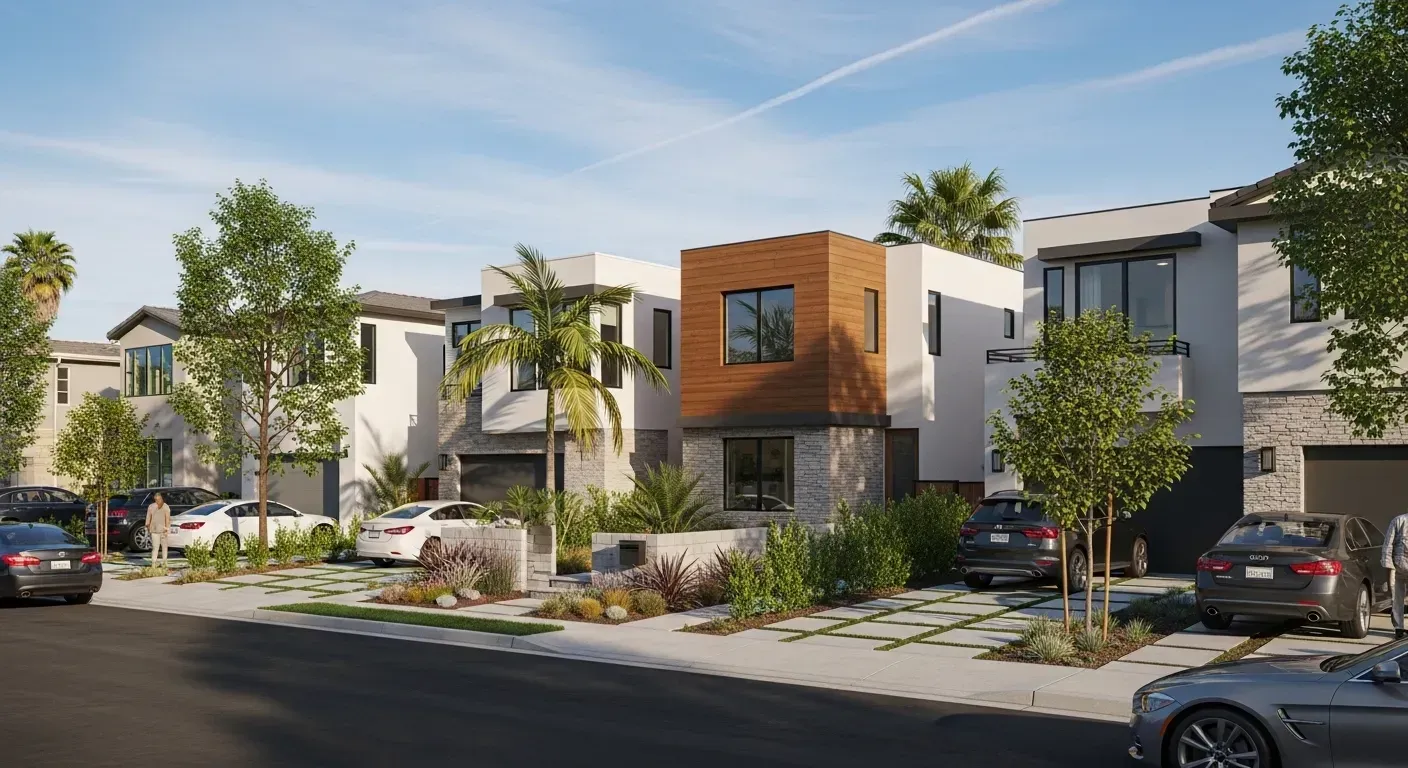
To facilitate these rapid acquisitions, our DSCR loans offer a streamlined path forward. By prioritizing the asset over the individual, investors can act decisively when the right opportunity hits the market.

The Math Behind the Metric

Understanding how lenders calculate this ratio is the first step in preparing your application. The formula is straightforward. You divide the Gross Rental Income by the Annual Debt Service. The debt service includes the principal, interest, property taxes, insurance, and any applicable homeowners association fees.


Consider a property that generates $4,000 in monthly rent. If the total monthly debt service is $3,000, the resulting ratio is 1.33. Lenders generally want to see a ratio of 1.2 or higher to ensure the property generates enough revenue to comfortably cover the mortgage while leaving a buffer for vacancies or maintenance. A ratio of exactly 1.0 means the property simply breaks even.

Strategic Advantages for the Modern Investor

Choosing this financial route offers several tangible benefits for those looking to expand their footprint in San Diego County.

  • Scale Without Limits: Traditional lenders cap the number of mortgages you can hold in your personal name. Because this specific financing focuses on the performance of the asset, there are no hard caps on the number of properties you can own.
  • Protect Personal Privacy: You can skip the exhaustive requests for pay stubs, W-2s, and personal tax returns. The underwriting process respects your time and your privacy.
  • Speed of Execution: Less paperwork naturally translates to faster underwriting. Closing a deal quickly is often the deciding factor in securing a lucrative property.

If you are just starting your journey in the local market, reading our detailed guide on buying your first investment property in San Diego provides a strong foundation for understanding how private capital empowers buyers.

Aligning Your Strategy with the Right Loan Product

These cash flow loans are designed specifically for buy-and-hold properties that are move-in ready or already tenanted. However, not all properties fit this exact mold upon purchase.


If you are purchasing a distressed property in El Cajon that needs significant renovations before it can safely generate rent, a fix and flip loan is the appropriate tool. This product covers both the purchase price and the rehab costs.

Alternatively, if you have acquired an empty lot in Pacific Beach, our ground up construction loans provide the staged capital necessary to build from scratch. Once the construction project is completely stabilized with a paying tenant, many investors choose to seamlessly refinance that short-term construction debt into a long-term DSCR product.


Building a Portfolio in San Diego County

San Diego County offers exceptionally diverse rental markets. Coastal communities consistently command high premium rents for both long-term and short-term occupancy. Inland neighborhoods provide strong, stable yields for long-term residential leases. Understanding the specific rental demand of the exact neighborhood you are targeting is the most important step in securing this type of financing.

Accurate rent schedules and professional appraisals are the backbone of a successful application. Working with a local lending partner ensures the underwriting team actually understands the specific nuances of the local market. National lenders often rely on automated valuation models that entirely miss the hyper-local factors driving rent prices in Southern California.

Steps to Initiate Your Application

Preparing your file correctly will speed up your closing timeline. You will need to provide an executed purchase contract, an appraisal detailing the expected market rent, a clear title report, and the entity documents for your LLC. Lenders require the borrower to form an LLC or corporate entity to close the loan, which actively separates your personal liability from the investment property.

Taking the first step is simple. Contact San Diego Hard Money today to discuss your specific scenario with a local underwriting expert. We will review your property data and outline the terms available for your next acquisition.

Frequently Asked Questions

  • What is a good DSCR ratio for an investment property?

    A ratio of 1.20 to 1.25 is generally considered strong and will easily qualify for highly competitive rates. A ratio of 1.0 means the property exactly covers its ongoing debt. Some lenders offer specialized products for ratios slightly below 1.0, though they typically require larger down payments and carry slightly higher interest rates to offset the risk.


  • Can I use a DSCR loan for a short-term rental?

    Yes. Many lenders accept short-term rental projections, especially in high-demand tourist markets like San Diego. The lender will review comprehensive data from property analytics platforms or your historical revenue statements to verify the projected income rather than relying strictly on standard long-term lease appraisals.


  • Do these loans require a down payment?

    Yes. Since the lender is not relying on your personal income to guarantee the monthly payments, they require a baseline of equity in the property to mitigate their risk. Expect to put down anywhere from 15 to 25 percent depending on your credit profile, the property type, and the calculated cash flow ratio.

By John Constantine May 6, 2026
Timing is notoriously difficult to align during property transactions. Buyers frequently find themselves in situations where the perfect property hits the market, but their capital is currently tied up in an existing asset. This creates a stressful funding gap that traditional banking institutions are rarely equipped to handle with the required speed.  When you need to act decisively, waiting weeks or months for conventional loan approval is not a viable strategy. Private lending solutions step into this void, providing the agility necessary to secure deals before competing buyers can make their move. As a dedicated partner in the local market, San Diego Hard Money provides the rapid capital necessary to keep your transactions moving smoothly. The Mechanics of Short-Term Capital A bridge loan serves exactly the purpose its name suggests. It creates a financial bridge connecting point A to point B. This type of funding is a short-term financing tool designed to provide immediate cash flow. Borrowers use this capital to meet current obligations while securing permanent financing or waiting for an existing property to sell. By utilizing bridge loans , borrowers can make highly competitive, non-contingent offers. When a seller sees an offer that does not rely on the sale of another house, that offer immediately moves to the top of the pile. The terms of these short-term loans typically span anywhere from six months to two years. This gives borrowers ample breathing room to execute their exit strategy, whether that involves selling an asset or refinancing into a long-term mortgage.
By John Constantine May 3, 2026
Time kills deals in real estate. When a prime distressed property hits the market in North Park or a high-yield rental opportunity opens up in Chula Vista, waiting months for a traditional bank approval is a guaranteed way to lose the contract. Competitive investors need immediate capital to secure profitable assets. By partnering with a dedicated San Diego Hard Money Lender , real estate professionals gain access to rapid liquidity, often securing project funding in as little as 48 hours. Traditional lending institutions simply cannot move at the speed required by modern real estate markets. They are burdened by massive regulatory frameworks, requiring endless documentation, tax returns, personal income verifications, and structural inspections before they will even consider an approval. For the active investor, these delays are unacceptable. Private capital solves this exact problem.
By John Constantine April 20, 2026
Securing your first investment property in San Diego requires a strategic approach to financing. The local real estate market moves rapidly. High demand, limited inventory, and competitive bidding environments define the landscape from coastal neighborhoods like Pacific Beach to inland communities like El Cajon. Real estate investors must act with speed and certainty to secure profitable deals. Traditional financing presents significant hurdles for property investors. Conventional banks operate with strict underwriting guidelines, extended approval timelines, and heavy reliance on personal income history. These restrictions often disqualify self-employed entrepreneurs or buyers targeting distressed properties that need extensive repairs. When a property lacks a functioning kitchen or clear pest report, a traditional mortgage lender will typically deny the loan.  Alternative financing provides the leverage necessary to compete. Private capital allows investors to bypass conventional red tape, focusing entirely on the profitability and equity of the real estate asset itself.
By John Constantine April 12, 2026
Real estate investing in San Diego requires a calculated blend of market knowledge and rapid execution. Whether you are a wholesaler spotting distressed properties in Pacific Beach or a syndication group eyeing a multifamily unit in Chula Vista, securing the right property is only the first step. The true catalyst for generating robust returns is the capital structure you choose to fund the acquisition and renovation. Traditional banking institutions operate on timelines that directly conflict with the demands of the competitive California housing market. This misalignment forces active investors to seek alternative financing mechanisms that prioritize speed and asset value over conventional underwriting metrics. San Diego Hard Money Lender provides the capital architecture necessary to turn promising acquisitions into completed, profitable assets. By understanding the specific loan options available locally, investors can strategically leverage outside capital to scale their portfolios and execute multiple projects simultaneously without draining their personal liquidity. 
By John Constantine April 6, 2026
San Diego, California, is one of the most competitive real estate markets in the nation. With rising demand for rental housing, multifamily investments have become a cornerstone strategy for developers, portfolio builders, and self-employed investors. Yet, traditional financing often falls short when speed, flexibility, and leverage are critical. This is where hard money lenders in San Diego step in, offering tailored solutions that empower investors to seize opportunities quickly.
By John Constantine March 31, 2026
For many self-employed investors and business owners in San Diego, traditional financing can be a challenge. Banks often require extensive documentation, tax returns, and strict credit checks that don’t always reflect the true financial health of entrepreneurs. That’s where bank statement loans come in providing flexible, asset-based financing tailored to the needs of San Diego’s dynamic real estate market.  In this blog, we’ll explore how bank statement loans work, why they’re ideal for self-employed borrowers, and how local investors can leverage them to grow their portfolios.
March 24, 2026
Wait sixty days for a bank loan in San Diego, and your deal is dead. That is the cold reality of the 619. While the national headlines talk about a cooling market, local boots on the ground know that a prime property in North Park or a coastal fixer in Encinitas still attracts a crowd of hungry buyers. To win here, you don't just need capital; you need velocity. That is where bridge loans and specialized real estate lending come into play.
By John Constantine March 17, 2026
In a competitive real estate market like San Diego, timing is everything. Whether you're a seasoned investor closing multiple deals a year or a builder racing against project deadlines, access to fast and flexible financing can make or break an opportunity. This is where a San Diego hard money lender becomes a powerful resource. Unlike traditional banks, hard money lenders focus on the value of the property and the strength of the deal, not just your credit score or income history. From quick bridge loans to long term investment financing, these lenders provide tailored solutions for local real estate professionals.
By John Constantine March 9, 2026
San Diego is one of the most competitive real estate markets in the United States. With strong rental demand, high property values, and a growing population, the city attracts real estate investors, house flippers, and rental portfolio builders looking to generate long-term income. However, buying rental properties in such a competitive market often requires fast access to capital. That’s why many investors in California turn to hard money financing to secure deals quickly and scale their rental portfolios.  In this guide, we’ll explain how rental property investors in San Diego use hard money loans, when they use them, and why this financing strategy is popular among local investors.
By John Constantine March 2, 2026
Introduction San Diego is one of the most competitive real estate markets in the United States. Properties in neighborhoods like Pacific Beach, North Park, Chula Vista, and El Cajon move fast. Investors who show up to closings with conventional financing approval letters lose deals to cash buyers and hard money borrowers every single week. If you are a real estate investor trying to scale your portfolio, a self-employed borrower who cannot satisfy a bank's documentation requirements, a fix and flip operator looking for fast capital, or a real estate professional advising clients on creative financing options, traditional bank loans are often the wrong tool for the job.  Hard money lending in San Diego fills the gap that conventional financing leaves open. It is faster, more flexible, and built specifically for the kind of real estate opportunities that banks either cannot move quickly enough to capture or simply will not touch. This guide covers everything you need to know about hard money lending in San Diego, from how the loans work and who qualifies to what they cost and how to find a lender you can trust.