How Hard Money Lenders Make Competitive Real Estate Markets Easier to Navigate
Navigating highly competitive real estate markets requires investors to bypass slow conventional banking in favor of agile, asset-based financing. Partnering with a specialized local lender empowers developers and property flippers to secure funds rapidly based on property value rather than personal income constraints.
* Private capital drastically reduces closing timelines from months to mere days.
* Asset-based underwriting ignores strict personal income requirements, favoring self-employed investors.
* Local lending institutions provide superior property valuations and market-specific intelligence.

The real estate sector demands constant agility from its participants. Investors operating in high-demand areas constantly face bidding wars, all-cash buyers, and dwindling property inventory. A promising asset hits the market and is often under contract within a matter of days. Relying entirely on conventional bank financing creates a structural disadvantage in this environment. A standard 45-day closing window is simply too slow when sellers prioritize transaction certainty and speed.
This environment is precisely where private capital becomes a strategic asset rather than just an alternative funding source. By utilizing specialized financing, real estate developers, contractors, and self-employed professionals gain the leverage necessary to close deals rapidly. Speed of execution frequently matters just as much as the final purchase price. Sellers are highly motivated to accept offers from buyers who can demonstrate guaranteed, rapid access to capital.
How a Hard Money Lender Transforms Purchasing Power
A reliable hard money lender shifts the focus from the individual borrower directly to the physical asset itself. Traditional financial institutions scrutinize personal tax returns, debt-to-income ratios, and years of corporate employment history. This rigid underwriting process often penalizes self-employed entrepreneurs and seasoned investors who continuously reinvest their available capital into new projects.
Private lenders take a fundamentally different and highly pragmatic approach. They evaluate the intrinsic value of the real estate and its projected post-renovation potential. This asset-based methodology strips away weeks of bureaucratic paperwork and corporate underwriting delays. Investors secure capital based primarily on the economic viability of the specific deal.
When competing against well-funded cash buyers, the ability to promise a swift and guaranteed closing date serves as the ultimate negotiating tool. Financing based on asset value allows investors to bypass the strict property condition requirements mandated by conventional mortgages. Traditional banks rarely fund properties with missing appliances, damaged roofs, or stripped plumbing. Private capital thrives on exactly these types of value-add opportunities.
Capitalizing on San Diego Real Estate Opportunities
California presents unique zoning challenges alongside exceptional financial rewards for property investors. The local market exhibits incredibly strong fundamentals. These include high rental demand, limited buildable coastal land, and a robust, diversified local economy. Low housing inventory levels dictate that finding distressed or undervalued properties requires significant persistence. Once an investor successfully identifies a viable rehabilitation project, hesitation immediately results in missed opportunities.
Working alongside a dedicated local partner like San Diego Hard Money Lender provides an immediate, localized advantage. National banking institutions utilize automated valuation models that frequently misinterpret Southern California neighborhood nuances. A local lending institution deeply understands the precise micro-markets of San Diego, California.
Local underwriters recognize exactly why a property in one specific zip code commands a significant premium over a visually similar property located just three miles away. This intimate geographic knowledge translates directly into faster property appraisals, highly accurate after-repair value assessments, and superior confidence during the final funding process.
Financing Strategies Tailored for Real Estate Investors
Securing the right type of capital is just as important as securing it quickly. Different investment strategies require highly specific financial structures to maximize the overall return on investment.
Executing Fast Turnarounds with Fix and Flip Financing
The classic property rehabilitation model relies entirely on strict time management. Every single day a property sits under renovation accumulates holding costs that erode the final profit margins. Securing a fix and flip loan provides the initial capital necessary to purchase the distressed asset while simultaneously funding the required construction renovations.
These short-term loans effectively cover both the acquisition and the heavy construction costs. Funds are typically released in scheduled draws as the general contractor completes specific project milestones. This structured approach protects the capital provider while ensuring the active investor maintains continuous cash flow. It allows teams to pay construction crews and purchase necessary building materials without experiencing any operational delays.
Stabilizing Portfolios Using DSCR Lending
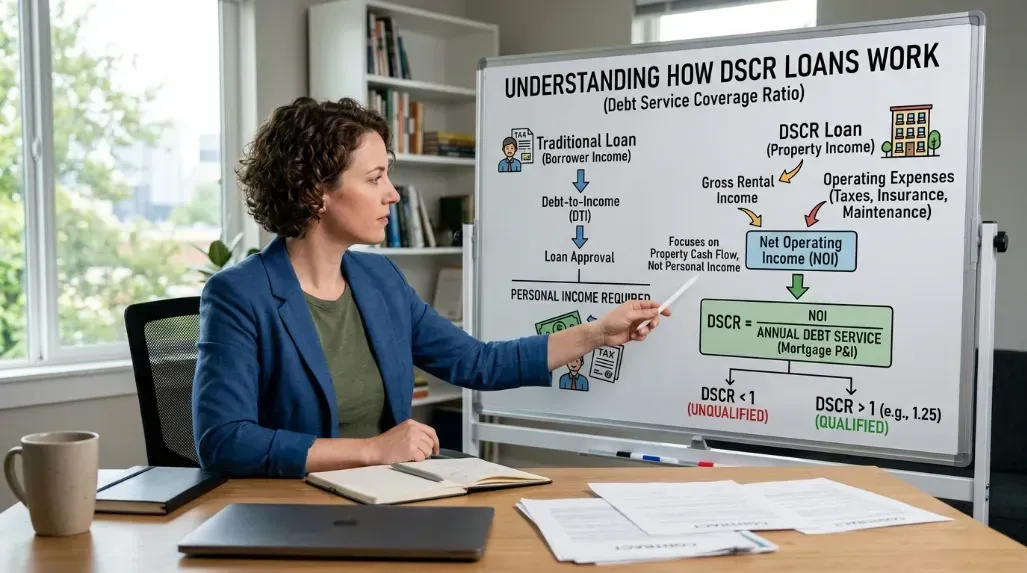
Long-term wealth generation routinely involves holding residential or multifamily properties for consistent rental income. Acquiring multiple properties quickly limits an investor's ability to qualify for conventional mortgages due to personal income constraints and strict debt-to-income limits.
Utilizing DSCR loans solves this specific problem directly. The Debt Service Coverage Ratio evaluates the generated cash flow of the investment property itself rather than the borrower. If the projected monthly rental income fully covers the monthly debt obligations and standard operating expenses, the loan qualifies. This specific approach allows self-employed professionals to expand their rental portfolios infinitely without providing W-2 statements or complex personal tax documentation.
Managing Ground-Up Development Projects
When existing property inventory falls drastically short of buyer demand, experienced developers simply create their own opportunities through new construction. Building properties from scratch requires specialized funding that accommodates municipal permitting, complex zoning laws, and phased construction schedules.
Using ground-up construction loans empowers developers to purchase vacant land, secure necessary building permits, and manage the entire developmental process. This covers everything from pouring the initial concrete foundation to completing the final exterior landscaping. The specific loan term aligns directly with the projected build schedule. This grants the developer adequate time to finish the project and either sell the completed asset or seamlessly refinance into a permanent, traditional mortgage.
Traditional Bank Loans vs. Private Capital Solutions
Understanding the precise mechanical differences between conventional banks and private lending institutions clarifies why serious investors overwhelmingly prefer the latter for real estate acquisitions. Traditional retail banks operate under strict federal regulations designed primarily for basic consumer protection. This framework inherently slows down rapid commercial transactions. Private lenders operate entirely with private capital, allowing them to dictate their own specific risk parameters and internal underwriting guidelines.
The following table highlights the core operational differences between these two primary financing avenues.
| Feature or Metric | Traditional Bank Financing | Private Capital Lending |
|---|---|---|
| Average Approval Timeline | 30 to 60 Business Days | 5 to 14 Business Days |
| Primary Qualification Focus | Personal Credit & W-2 Income | Property Value & Renovation Potential |
| Property Condition Rules | Must be fully habitable upon purchase | Distressed or uninhabitable properties accepted |
| Documentation Requirements | Extensive tax returns and employment history | Corporate entity documents and basic scope of work |
| Operational Flexibility | Rigid institutional guidelines | Highly negotiable and deal-specific terms |
Strategic Partnerships for Immediate Market Access
Establishing a strong working relationship with a reliable financial partner should happen long before submitting a formal offer on a property. Investors who present verified pre-approval letters from recognized local lenders immediately elevate their professional credibility with selling agents. As your property portfolio grows over time, the operational efficiency of your financing partner becomes a central component of your overall business profitability.
Whether you are a newer investor tackling a first residential rehabilitation project or a seasoned commercial developer planning a large multi-unit complex, localized expertise streamlines the entire acquisition process. Our executive team operates directly out of 356 Sunswept St, San Diego CA 92114. This local presence ensures that our clients have immediate, direct access to the actual decision-makers who truly understand the regional economic landscape.
Successfully navigating a highly competitive real estate market requires having the right tools readily available. Capital is the most important tool in any property investor's arsenal. If you are prepared to position yourself aggressively in the local housing market, contact our main office at +1 619 983-0898 to actively discuss your current project pipeline and future capital requirements.
Frequently Asked Questions
What is the typical approval timeline for private real estate financing?
Private real estate loans typically close within 5 to 14 business days depending on the complexity of the specific transaction. Because the underwriting process focuses primarily on the value of the physical asset rather than the personal financial history of the borrower, lenders can verify property details and issue funding rapidly.
Do private lenders require high personal income for approval?
No. Private lenders and asset-based lending institutions do not focus heavily on personal income levels, W-2 statements, or strict debt-to-income ratios. The primary qualification metric is the economic viability of the property, the projected after-repair value, and the overall profitability of the proposed real estate investment strategy.
Can I use private capital for both residential and multifamily investments?
Yes. Private capital is highly versatile and can be effectively utilized for single-family residential flips, large multifamily apartment acquisitions, and even mixed-use commercial developments. Different loan structures are specifically tailored to match the intended use of the property and the desired timeline of the real estate investor.